With our guides you will be able to personalize duration and difficulty of the routes based on your own wishes and walking pace. In a few clicks you can create your personalized hiking guides. Choose your starting point, your arrival point and, if you wish, even a middle point where to take a break.
The Camino Primitivo (The Primitive Way) is believed to have been the first Jacobean itinerary of which information is available. This route is the one followed by King Alfonso II “the Casto” to visit the tomb of the Apostle James, discovered in the IX century during his reign. It is about 195 ml long, it starts from Oviedo and crosses Asturias and Galicia in about 15 days, rejoining the French Way in the charming town of Melide. Much of this itinerary takes place above the eight hundred meters, with continuous ascents and descents, crossing beautiful mountains, streams of fresh water, and small and fascinating rural towns. It is a route that is challenging at times, but not prohibitive: just a minimum level of training is required for it. There are two alternatives that bifurcate in the town of Borres and rejoin in Porto del Palo: The Hospitales route is the oldest trail, passing along a ridge on a panoramic mountain path strewn with ruins of ancient pilgrim hospitales. The alternative route down Pola de Allande has more slopes than the first one, but can be walked into shorter stages. It is especially recommended to pilgrims when the weather conditions do not allow walking on the ridge paths.
Map of The Camino Primitivo
Our guides
History and characteristics of the route
The origins of the Camino Primitivo are deeply rooted in the very beginnings of the Jacobean cult. In the first third of the 9th century, when Bishop Theodomir announced the discovery of the relics of the Apostle James in a remote area of Galicia, it was Alfonso II the Chaste, King of Asturias, who became the first royal pilgrim to undertake the journey to what would later become Santiago de Compostela. The monarch ordered the construction of the first church dedicated to Saint James and founded the first monastic community, that of Antealtares, intended to serve the worship at the apostle’s altar.
The Camino Primitivo was the route most frequently used by pilgrims during the 9th and 10th centuries. It reached the height of its importance under the reign of Alfonso III the Great, who traveled this itinerary on two occasions and was responsible for the consecration of the second basilica of Santiago in the year 899. Subsequently, in the 11th and 12th centuries, when León became the new capital of the kingdom, the monarchs promoted the Camino Francés as the main route, but the Primitivo never lost its spiritual appeal, remaining a route of excellence for medieval devotion. Oviedo, in particular, remained an essential crossroads for pilgrims of the time; visiting the Cathedral of San Salvador was considered an almost obligatory act of faith, to the point that the journey to Santiago was deemed “incomplete” without a stop in the Asturian capital. Further prestige was added to the route by the city of Lugo, where the Cathedral enjoyed the exceptional papal privilege of permanently displaying the Blessed Sacrament.
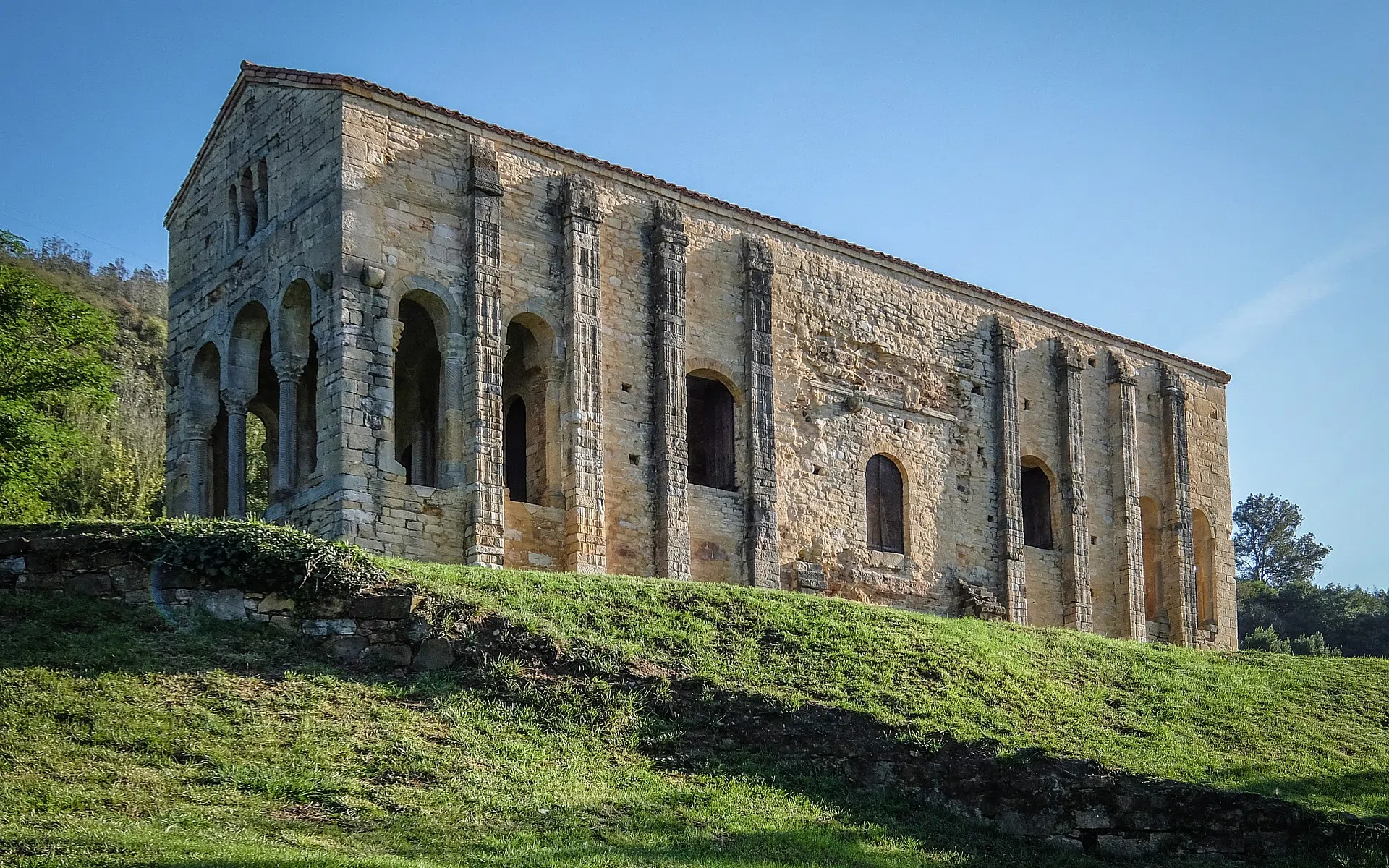
The Camino Primitivo stands out for its wild character and the beauty of its green, unspoiled landscapes, typical of Asturias. The route alternates constant ascents and descents, along dirt roads and mountain paths of the Sierra de Fonfaraón, passing through villages rich in history such as Grado, Salas, Tineo, and Pola de Allande. The beating heart of the route is the mountain pass of Puerto del Acebo (Alto do Acebo): at an altitude of 1,250 meters, this natural border between Asturias and Galicia offers one of the toughest, yet visually most extraordinary challenges of the entire Camino. The cultural and artistic heritage along the way is remarkable: from the pre-Romanesque churches of Santa María del Naranco and San Miguel de Lillo near Oviedo (a UNESCO World Heritage Site), to the palaces and medieval towers scattered throughout Asturian villages and finally to the perfectly preserved Roman walls of Lugo. The Camino also preserves traces of the ancient medieval hospitals (hospitales), whose remains can still be found today along the mountain section of the Ruta de los Hospitales.
The difficulty level of the Camino Primitivo is generally considered medium–high. The continuous elevation changes, mountain trails, and the crossing of remote areas with limited services require good physical preparation and a strong ability to adapt. However, it is precisely this challenge that makes it unique. It is the ideal choice for those seeking an authentic experience, far from the crowds of the other Jacobean routes.
The Route of the Camino Primitivo
The route begins in the historic city of Oviedo, capital of Asturias, where pilgrims should take time to visit the magnificent Cathedral of San Salvador, which houses precious relics in its Cámara Santa, including the Cruz de los Ángeles and the Cruz de la Victoria, symbols of the Kingdom of Asturias. Before leaving the city, it is worth strolling through Plaza del Fontán, with its covered market and traditional architecture, and visiting the extraordinary 9th-century pre-Romanesque churches that rise on the surrounding hills: Santa María del Naranco and San Miguel de Lillo, masterpieces of Asturian art declared UNESCO World Heritage Sites. The route sets off from the cathedral, following iron plaques embedded in the paving stones, and quickly crosses the modern districts of Oviedo, passing the railway line and heading west through industrial areas that gradually give way to a more rural landscape.
After leaving San Lázaro de Paniceres and Llampaxuga behind, the path winds through gently rolling countryside with small hamlets and passes through the village of Escamplero, renowned for its centuries-old chestnut forest, which offers a stretch of rare natural beauty, albeit physically demanding due to the constant ups and downs. The route then descends toward the Río Nalón, one of Asturias’ main rivers, which is crossed via the Peñaflor Bridge to enter Grado, an elegant town characterized by interesting examples of medieval architecture, 19th- and 20th-century civic buildings and Indianos architecture—homes built by emigrants who made their fortunes in the Americas. The Parque de San Antonio, the Palacio Miranda-Valdecarzana and the remains of the medieval walls further testify to the historical importance of this town.
From Grado, the Camino continues through a series of small rural villages such as Peñaflor, Cornellana, home to the 12th-century Benedictine monastery of San Salvador and Salas, a medieval town dominated by the medieval Tower of los Valdés and the imposing Collegiate Church of Santa María la Mayor, which houses the remarkable Renaissance mausoleum of General Fernando de Valdés Salas, founder of the University of Oviedo and Grand Inquisitor of Spain. The slopes become steeper as one moves into western Asturias, and the landscape increasingly mountainous, with forests of oak, chestnut and hazel alternating with green meadows where livestock graze.
These typical rural hamlets, often made up of just a few stone houses and ancient raised granaries (hórreos), represent the authentic and silent soul of the Asturian mountains. Crossing these tiny settlements where time seems to have stood still, the pilgrim finally reaches Tineo, the administrative center of one of the largest "concellos" in the region, set on a hill overlooking the surrounding valleys. Here it is worth visiting the Palacio de García, a 15th-century noble residence, and the Parish Church of San Pedro, which preserves interesting works of sacred art. The route then continues toward Pola de Allande, a medieval town founded in the 13th century by Pedro II, Bishop of Oviedo, who granted it privileges that transformed it into an important commercial center. The Plaza del Ayuntamiento, with its traditional houses featuring wooden balconies and the Palacio de los Cienfuegos bear witness to the former splendor of this mountain village.
Upon reaching Borres, pilgrims face a crucial crossroads that defines their Camino experience. The main route descends into the valley to reach Pola de Allande, offering services and accommodation before the ascent to the Puerto del Palo. The alternative is the legendary Ruta de los Hospitales, the historic variant that heads directly into the Sierra de Fonfaraón. Choosing this route means immersing oneself in 23 kilometers of wild, high-mountain nature, a path devoid of settlements or refreshment points that follows the ancient medieval track. It is a demanding challenge requiring preparation, sufficient water supplies, and favorable weather conditions, but it rewards the senses with the contemplative solitude of the high plateaus and panoramas stretching from the Picos de Europa across the entire Cordillera Cantábrica.
Both variants converge after the Puerto del Palo (1,146 meters), where the landscape opens onto spectacular views toward Galicia. The path then descends steeply through Montefurado and Lago to Berducedoo, the first Galician village, welcomed by the region’s typical stone and slate architecture. Continuing through Pedregal and A Fonsagrada, a town located on a plateau over 900 meters above sea level and an important stopping point, the Camino definitively enters Galician territory, characterized by a gentler yet still demanding landscape, with continuous ups and downs through farming villages, eucalyptus and oak forests, and vivid green meadows crisscrossed by streams.
After O Cádavo, a small rural settlement, and crossing the Serra do Oribio, the pilgrim finally reaches Lugo, a city of Roman origin and one of the highlights of the entire route. The magnificent Roman walls that completely encircle the historic center, over two kilometers long and perfectly preserved after seventeen centuries, are a UNESCO World Heritage Site and unique of their kind. Within the walls, the Cathedral of Santa María, a Gothic-Romanesque building begun in the 12th century, holds the unique privilege in Spain of permanently displaying the Blessed Sacrament. Lugo also offers pilgrims the opportunity to immerse themselves in authentic Galician cuisine: the famous polbo á feira (Galician-style octopus), empanada filled with meat or fish, local cheeses, and wines from the Ribeira Sacra are culinary experiences not to be missed.
Leaving Lugo through San Vicente do Burgo, the route continues through the rolling Galician countryside, passing San Romão da Retorta, where some pilgrims stop to visit the small sanctuary dedicated to Santa María, and heading south through villages such as Augas Santas, traditionally associated with the martyrdom of Saint Marina. The landscape is characterized by small agricultural plots, hórreos (traditional Galician granaries built on stone pillars to protect grain from rodents), eucalyptus and oak forests, and endless stepped “stone walls” dividing tiny parcels of land.
In Melide, a historic town famous for its pulpo served in the many pulperías of the town center, the Camino Primitivo merges with the Camino Francés, the most popular route of the Jacobean pilgrimage. From this point on, the pilgrim joins the main flow of walkers coming from Saint-Jean-Pied-de-Port, and the atmosphere changes noticeably: more albergues, more services, but also many more people. The Romanesque Church of Santa María and the medieval Cruceiro in the center of the square testify to Melide’s Jacobean past.
The final sixty kilometers to Santiago follow the Camino Francés route, passing through Boente, with its Romanesque Church of Santiago, Ribadiso da Baixo, where an ancient 14th-century pilgrims’ hostel still exists, and Arzúa, capital of the eponymous Galician cheese, produced from cow’s milk using traditional methods and protected by a Designation of Origin. The route continues through Salceda, Santa Irene and O Pedrouzo (or Arca), the last stage before Santiago, where many pilgrims spend the night in order to enter Compostela at dawn the following day.
The final stretch passes through Lavacolla, where according to tradition medieval pilgrims washed themselves before entering the holy city and climbs to Monte do Gozo (Mount of Joy), from which pilgrims enjoy their first view of the towers of the Cathedral of Santiago. From there, a four-kilometer descent through the city’s modern districts finally leads to the long-awaited destination: Plaza do Obradoiro, where the Baroque façade of the Cathedral of Santiago de Compostela rises triumphantly, the endpoint of all the Caminos and the place where, according to tradition, the remains of the Apostle James the Greater rest. Entering the cathedral through the Pórtico de la Gloria, embracing the statue of the Apostle, descending into the crypt where the reliquary is kept, and attending the Pilgrims’ Mass with the botafumeiro swinging majestically through the central nave represent the spiritual and emotional culmination of an experience that profoundly transforms the pilgrim.
The Ruta de los Hospitales Variant
The Ruta de los Hospitales deserves special attention, as it is considered the queen stage and the most fascinating of the entire Jacobean panorama. This alternative route, which connects Borres to Berducedo across the ridges of the Sierra de Fonfaraón, represents the authentic itinerary of medieval pilgrims, used long before the founding of Pola de Allande in the 13th century offered a more sheltered valley alternative. The route extends for approximately 23 kilometers in a truly solitary high-mountain environment, remaining between 1,000 and 1,250 meters in altitude and following ancient pastoral paths that connect the "brañas", the high-altitude summer pastures and the "colladas". Departing from La Mortera, the last inhabited settlement where the chapel of San Pascual Bailón stands, the trail gradually ascends through natural meadows where livestock graze freely and the panorama opens onto sweeping views of the Cordillera Cantábrica, allowing the unmistakable silhouettes of the Picos de Europa to be seen on the horizon.
Along the way, one encounters the remains of the four ancient medieval assistance centers that give this route its name: Paradiella, already documented in the 15th century; Fonfaraón, whose ruins still offer emergency shelter; Valparaíso; and finally La Freita, located at the entrance to the Puerto del Palo. These hospices arose as essential aid points in what was then a hostile territory, run by shepherds who offered warmth and refuge to travelers. Today, the trail crosses evocative places such as the Braña de Fonfaraón, a wide plateau where it is common to spot wild horses and free-roaming herds of cattle. Despite its isolation, the route is precisely marked with yellow arrows and closely spaced stone, the "mojones", indispensable tools for orientation in fog or low cloud conditions.
Tackling this variant requires adequate preparation and caution. As the route lacks trees and shaded areas, it is essential to carry sun protection and ample supplies of water and food, since mountain springs are not always reliable. It is vital to set out only in favorable weather conditions and with a fully charged phone, avoiding the route in winter or in the presence of dense fog. Despite the physical demands and steep climbs, the Ruta de los Hospitales offers a mystical and unforgettable pilgrimage experience, capable of connecting the traveler with the millennia-old history of the Camino through a contemplative solitude that is hard to find elsewhere.
How to Get to Oviedo
By Plane: The airport closest to Oviedo is Asturias Airport, located in Castrillón, 47 kilometers from the city. The airport is served by several airlines, including Iberia, Iberia Express, Air Europa, Air Nostrum, EasyJet, Evelop, TAP Portugal, Volotea, and Vueling Airlines, with regular connections to major Spanish cities such as Madrid, Barcelona, Valencia, and Seville, as well as some European destinations. From the airport, regular buses operated by the company ALSA connect the terminal with the center of Oviedo in approximately 45–60 minutes, with frequent services throughout the day. Tickets can be purchased online on the ALSA website or directly on the bus. An alternative is a taxi, which takes about 30 minutes and costs around €40–50.
By Train: Oviedo is well connected to the Spanish railway network thanks to its train station located on Calle Perpetuo Socorro, in a central position just a few minutes’ walk from the historic center. The company Renfe offers direct connections with major Spanish cities: ALVIA and Intercity trains link Oviedo with Madrid (about 5 hours), León (2 hours), Palencia, Valladolid, and other destinations in Castile and León; regional services serve Gijón, Avilés, and other Asturian towns; long-distance trains also connect Oviedo with Barcelona, Alicante, and Valencia, although these often require transfers in Madrid or León. It is advisable to book tickets in advance on the Renfe website, especially during high season, to obtain more favorable fares.
By Bus: The Oviedo bus station is located on Calle Pepe Cosmen, adjacent to the train station, in the heart of the city. The main company is ALSA, which operates connections with many Spanish cities, including direct services from Madrid (5–6 hours), Bilbao, Santander, León, Valladolid, Salamanca, and many other destinations. Buses are generally modern, comfortable, and equipped with air conditioning, Wi-Fi, and toilets. Tickets can be purchased online on the ALSA website with significant discounts for advance purchases, or directly at the station.
When to Walk the Camino Primitivo
Choosing the right time to walk the Camino Primitivo is particularly important due to the mountainous nature of the route and the climatic characteristics of the regions it crosses.
Spring (April–May): This is considered the ideal period to walk the Camino Primitivo. The landscapes are at the height of their spring bloom, with lush green meadows dotted with wildflowers, thriving forests, and pleasant temperatures ranging between 12 and 18 degrees Celsius in the valleys, cooler at higher elevations. The days grow longer, offering many hours of daylight, which is essential for the longer stages. The number of pilgrims is moderate, allowing walkers to enjoy the tranquility of the route and to easily find accommodation. The main drawbacks are rainfall, still frequent especially in April (always carry a good rain jacket) and the possibility of residual snow or difficult conditions on the higher mountain passes such as Puerto del Palo, especially during the first weeks of April.
Summer (June–August): Summer offers the advantage of long days and generally stable weather conditions, with less frequent rainfall. However, July and August can be very hot in lower-lying areas, with temperatures exceeding 30 degrees Celsius, making climbs more strenuous and increasing the risk of dehydration. In the mountains, by contrast, the climate remains pleasant. This is the period of highest tourist numbers, so hostels can be crowded and in some cases advance booking is necessary, especially after Melide where the Primitivo joins the French Way. A significant advantage is that all services are fully operational and that the Ruta de los Hospitales can be tackled more safely, although temperatures at altitude can still be cold in the early morning hours.
Autumn (September–October): September is probably the best month for the Camino Primitivo. Temperatures become pleasant again (15–22 degrees Celsius), the flow of pilgrims drops significantly after mid-month, forests take on autumn colors creating spectacular landscapes, and the grape harvest and chestnut season make the gastronomic experience particularly rich. October retains many of these advantages, although toward the end of the month rainfall becomes more frequent, daylight hours shorten considerably (it is important to carefully calculate available daylight), and some services begin to reduce hours or close. There is also a risk of persistent fog in the mountains, which makes the Ruta de los Hospitales dangerous.
Winter (November–March): Walking the Camino Primitivo in winter is reserved for very experienced and well-equipped pilgrims. Conditions can be extremely challenging: heavy and frequent rainfall, snow on mountain passes (which may become impassable), temperatures dropping below freezing at altitude, very short days (with only 8–9 hours of daylight in December–January), and the closure of many hostels and services, especially in the mountainous areas of Asturias. The Ruta de los Hospitales is strongly discouraged or even impossible from November to March. The advantages are near-total solitude, lower prices where services remain open, and a particularly austere and spiritual pilgrimage experience. It is essential to monitor weather forecasts daily, carry winter mountain equipment, and always have a backup plan.
In summary, the best period to walk the Camino Primitivo is from late April to early October, with a preference for May, June, and September as optimal months that balance favorable weather conditions, magnificent landscapes, and moderate crowd levels.
Practical Tips for the Pilgrim
Accommodation: The Camino Primitivo offers an adequate accommodation network, although less developed than that of the French Way. Along the route you will find public hostels, managed by local authorities (price around €6–12, donation-based in some cases), private hostels with more complete services (€10–18), guesthouses and hostels (€20–40), hotels and rural houses (€40–80), and luxury hotels in the main cities (€100–150). It is important to know that in Asturias some mountain sections have few accommodation options and distances between villages can be considerable: when necessary, it can be useful to split officially long stages into two days or to book in advance, especially during the summer months. From Melide onwards, where the Primitivo joins the French Way, the accommodation offer increases significantly, but so does demand, making reservations almost essential in high season.
Pilgrim Credential: The credential, or pilgrim passport, is the essential document required to stay in hostels and to obtain the Compostela in Santiago. It can be requested before departure from Italian Jacobean associations (cost approximately €2–5), or at the start of the Camino at the Cathedral of Oviedo, from pilgrim associations in Oviedo or in the first public hostels along the route. The credential must be stamped (sello) at least twice a day in hostels, churches, bars, restaurants, municipal offices, and other facilities along the Camino. To obtain the Compostela, it is necessary to have walked at least the final 100 kilometers on foot (or 200 by bicycle), a requirement that the Camino Primitivo easily fulfills when starting from Oviedo.
Waymarking: The Camino Primitivo is generally well signposted, although less frequently than the French Way. The yellow arrow painted on walls, stones, trees, and asphalt is the main guiding symbol, accompanied in many areas by the mojones (stone markers) with the scallop shell, wooden posts, and directional signs. In mountainous areas, especially on the Ruta de los Hospitales, waymarking is more frequent precisely to prevent getting lost in foggy conditions. Nevertheless, it is strongly recommended to carry a paper or digital guide and to have offline maps on your phone. A GPS application or apps dedicated to the Camino routes are invaluable tools, especially in isolated sections or in conditions of poor visibility.
Physical Preparation: The Camino Primitivo requires good physical preparation due to the constant elevation changes and the mountainous nature of the route. It is advisable to start a training program at least 2–3 months before departure, including progressively longer walks with a loaded backpack, ascents and descents to condition legs and joints for the effort and muscle-strengthening exercises for the back. It is important to arrive on the Camino with well-broken-in footwear to avoid blisters.
Why Choose the Camino Primitivo
The Camino Primitivo represents a Jacobean experience profoundly different from that offered by more heavily traveled routes and it is precisely in this difference that its unique charm lies. This is the Camino for those seeking historical authenticity, as it is the first documented itinerary of the Jacobean pilgrimage, the one walked by the first pilgrim king, Alfonso II, in 829. Walking in the footsteps of that first historic journey, passing through the same places where the Jacobean tradition was born, gives the route a special meaning that goes beyond the physical experience.
The quieter and more intimate atmosphere is one of the elements most appreciated by pilgrims who choose the Primitivo. Especially in the first 200 kilometers, before the junction with the French Way at Melide, the number of walkers is significantly lower than on other Jacobean routes. It is not uncommon to walk for hours through forests and mountains without encountering other pilgrims, an increasingly rare opportunity in the landscape of long-distance trails. This solitude is not isolation, but rather a precious space for inner reflection, dialogue with oneself, and that contemplative experience many seek in a pilgrimage. In hostels, a stronger sense of community develops precisely because groups are smaller, fostering genuine encounters and lasting friendships.
The landscapes of the Camino Primitivo are of extraordinary beauty, unmatched by other routes. The mountains of Asturias, with their chestnut and oak forests, lush green meadows where livestock graze, high-altitude brañas (ancient settlements), spectacular views of the Cantabrian Mountains and the Picos de Europa, and stone villages clinging to mountain slopes, create an unforgettable visual experience. The Ruta de los Hospitales, in particular, offers high-mountain scenery reminiscent of the Pyrenees, but with a distinctly Asturian character. Walking days are demanding but never monotonous, thanks to the constant variety of the terrain.
The cultural richness along the route is extraordinary: from the 9th-century Asturian pre-Romanesque churches (Santa María del Naranco, San Miguel de Lillo), UNESCO World Heritage Sites, to the perfectly preserved Roman walls of Lugo, unique in the world, passing through medieval monasteries, noble palaces, defensive towers, and historic villages that have preserved their traditional architecture intact. Every village tells centuries of history, and local people, especially in rural areas, still preserve traditions linked to agricultural and pastoral life.
From a gastronomic point of view, the Camino Primitivo is a journey through two of Spain’s richest culinary traditions. Asturias offers its famous fabada (white bean stew with chorizo and blood sausage), sidra (cider) served ritually escanciada (poured from a great height), cheeses such as Cabrales and Gamoneuand cachopo (breaded meat stuffed with ham and cheese). Galicia delights pilgrims with its renowned pulpo á feira, empanadas, lacón con grelos (pork shoulder with turnip greens), extremely fresh seafood, cheeses such as Arzúa-Ulloa and Tetilla and excellent white wines Albariño and Ribeiro. Every stage is an opportunity to discover authentic flavors in taverns and family-run restaurants where culinary tradition is alive and proudly defended.
The spiritual experience on the Camino Primitivo has a special quality. The physical effort of mountain climbs, the solitude of the paths, the silence broken only by the sounds of nature, and the simplicity of rural hostels create ideal conditions for what medieval pilgrims called the “inner journey.” The Primitivo offers no shortcuts: it demands commitment, determination, and humility in the face of one’s limitations. But precisely for this reason, arrival in Santiago takes on an even deeper meaning. Many pilgrims testify that the Primitivo transformed them more than other routes, thanks to this combination of physical challenge and contemplative immersion.
This Camino is aimed at experienced pilgrims, seekers of authenticity who want to escape the crowds and immerse themselves in a more intimate experience, lovers of nature and mountains who appreciate wild and demanding landscapes, those who are physically prepared and unafraid of elevation changes and those seeking a pilgrimage in its deepest sense, not merely a tourist hike but a true path of inner transformation.
The Camino Primitivo is not for everyone and that is its greatness. It does not offer comfort, it is not the easiest or the most popular. But for those ready to embrace its challenge, it offers an authentic, intense, and unforgettable pilgrimage experience, one that comes closest to the original spirit of the first pilgrims who, more than a thousand years ago, crossed mountains and valleys to reach the apostle’s tomb at the western edge of the known world. As the Asturians say: “El Camino Primitivo no se olvida nunca” – the Camino Primitivo is never forgotten. This Camino crosses two Spanish regions – Asturias and Galicia – offering pilgrims an experience of extraordinary natural beauty and historical richness. Among its main highlights are the Cathedral of San Salvador in Oviedo with its Cámara Santa (a UNESCO World Heritage Site), the Asturian pre-Romanesque churches, the Roman walls of Lugo (unique in the world and also a UNESCO World Heritage Site) and the mountain landscapes of the Sierra de Fonfaraón. Since 2015, the Camino Primitivo has been declared a UNESCO World Heritage Site, a recognition that certifies its historical, cultural, and spiritual importance.
Plan your route with the The Camino Primitivo App
Download or print the PDF guide of The Camino Primitivo
The Forwalk paper guide is an A5 format mini-book with all the information on your chosen paths, the detailed maps, the list of hotels and much more. It is very easy to consult and to carry along during your trip. This guide is completely personalized to your needs and made available to you digitally (Acrobat Reader PDF file), to be accessed through smartphones and tablets or printed by you. You can also order it already printed in color on glossy paper, and delivered to you as a finely bound book.
Download the gpx routes map of The Camino Primitivo
GPX tracks are maps that you can download on GPS device to take with you on your walk. Our GPX tracks include routes with details of places such as shops, restaurants, lodgings, drinking fountains and springs.
- Download From Oviedo to Santiago through the Hospitales route
- Download From Oviedo to Santiago: 16 days on the Route of Pola
- Download From Oviedo to Santiago: 11 days on the Route of Pola
- Download The Way of Saint James from Lugo: the last 100km
Our GPX tracks are tested on the following devices : Garmin ETREX 22x, Garmin eTrex Touch 35, Garmin Oregon 700, Garmin GPS MAP 66